Drone Program Builds More Than Technical Skills at Clarke Central
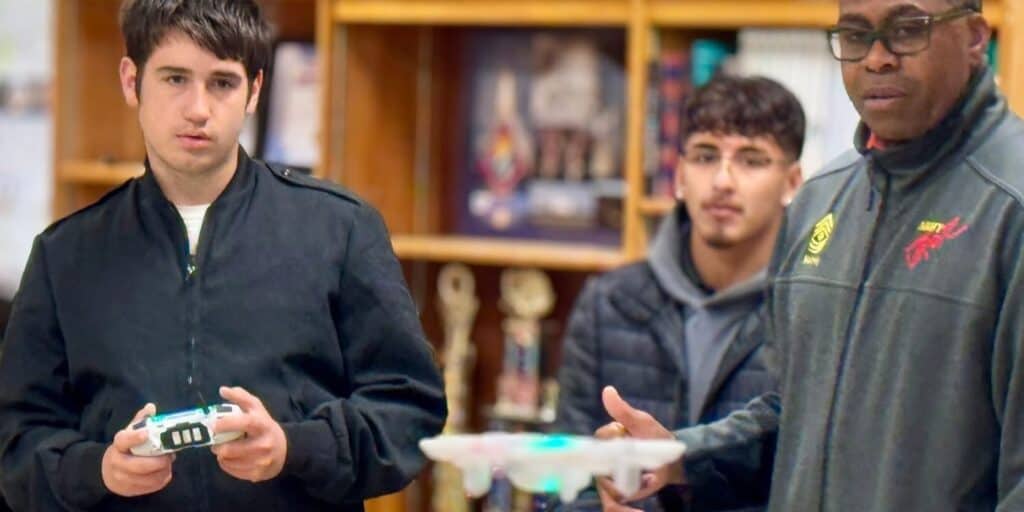
Cadet Alicia Arellano came into the Clarke Central drone program hesitant to speak up in class. Months later she was part of a team, teaching drone safety and piloting fundamentals to 180 of her fellow cadets. Cadet Ezra Long came in to learn how to fly and ended up learning how to fix what breaks, a skill he now uses with a drone of his own. Cadet Angelo Sevilla said the program opened his eyes to STEM careers, including robotics and engineering.
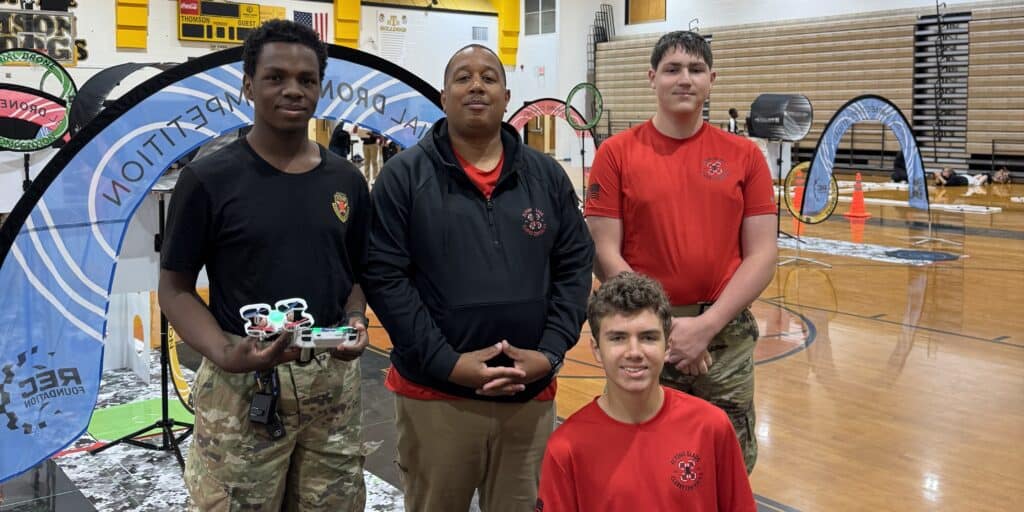
SFC Kenneth Washington, who launched the program this year, has quickly seen the transformative effect drones can have in the classroom. It’s showing up in competitions, too. His cadets placed first overall at their first competition and earned the Navy Drone Maverick Award.
“What we are witnessing goes far beyond students simply learning to fly drones,” said Washington.
Cadets are building and calibrating systems, interpreting real-time data, and making decisions under pressure. The habits they’re developing are those of engineers and analysts, not just pilots.
A HireSmart Cares grant provided equipment that made the program possible, along with a competition course the cadets helped design and build themselves from PVC pipe. The nonprofit, founded by Mark and Anne Lackey of Jackson County, funds workforce development programs across northeast Georgia and beyond with a focus on giving students pathways to good careers that don’t require college debt. Drone operators are in high demand, and the FAA commercial pilot certification cadets are working toward can open doors to jobs in engineering, aviation, agriculture, public safety, and more.
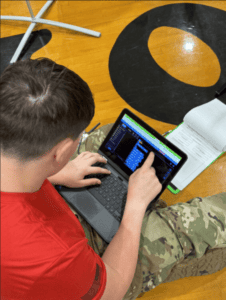 The team’s co-captain, Cadet Ezra Long, found himself learning all about repair work.
“One thing I’ve learned from this program is how to fix and repair these drones,” said Long. “Even though they’re made from great materials, they sometimes break. And occasionally, we’ve had to replace motors or propellers, and I’ve learned a lot of new skills on how to do that.”
He takes what he learned into the air on his own time, flying his own drone in new environments, shooting photos, doing things he said he doesn’t normally get to do. Sevilla, the team’s programmer, said the experience pushed him in a different direction entirely.
“Being on the drone team has helped me with my programming skills, and it has encouraged me to seek more STEM careers, like robotics or engineering,” said Sevilla.
One of the more striking developments Washington described involved Arellano, whose goal is to pursue engineering. Washington, a retired Army veteran with 20 years of service, said one of the program’s greatest strengths is its ability to remove barriers for students like her. In his program, which serves many cadets for whom English is a second language, technology becomes a shared language.
“Students are evaluated not by how well they speak, but by how well they think, solve problems, and work as a team,” said Washington.
Within that environment, Arellano’s confidence steadily increased. She transitioned from hesitant participant to active contributor, sharing ideas and solving problems alongside her teammates. By the end of the year she was part of a team standing in front of 180 of her fellow cadets, teaching drone safety and piloting fundamentals. Washington said watching her lead and instruct her classmates was one of the clearest demonstrations of what the program actually does. 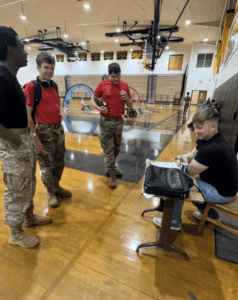
Behind the competition win and the classroom breakthroughs is First Sergeant Francisco Ramey, an experienced drone operator who has been instrumental in the program’s development. He opened his training facility to the cadets, giving them real-world experience in drone operations, safety, programming, and course setup. He also developed a two-phase training approach that prepares cadets for the FAA Part 107 certification, combining hands-on instruction with practice exams. Washington said he’s confident his cadets will be ready to earn their FAA Small Unmanned Aircraft Systems commercial pilot certification.
The competition gave him plenty of reason to feel confident.
“I’m proud to share that they placed 1st overall, earning the Navy Drone Maverick Award,” Washington wrote to HireSmart after the competition. “This achievement is a direct reflection of their hard work and dedication, and your support played a key role in making it possible.”
Washington said the plan is to expand participation in additional competitions, continue preparing students for FAA certification, and keep building on what the cadets have already proven they can do.
One cadet has already taken that next step on his own.
“I’ve taken all the skills I’ve learned here in this program and applied them with my own drone,” said Long, “and take it out to a new environment and fly it around and fly safely, and then be able to take amazing photos with it and a lot of other interesting stuff that I don’t normally get to do.”