Eddie White Drone Program Helps Students Imagine Bigger Futures
 There’s a moment in almost every movie where the camera lifts. The city opens up below. San Francisco, maybe, the bay sliding past under a wide sweeping shot that lasts four seconds and then cuts away.
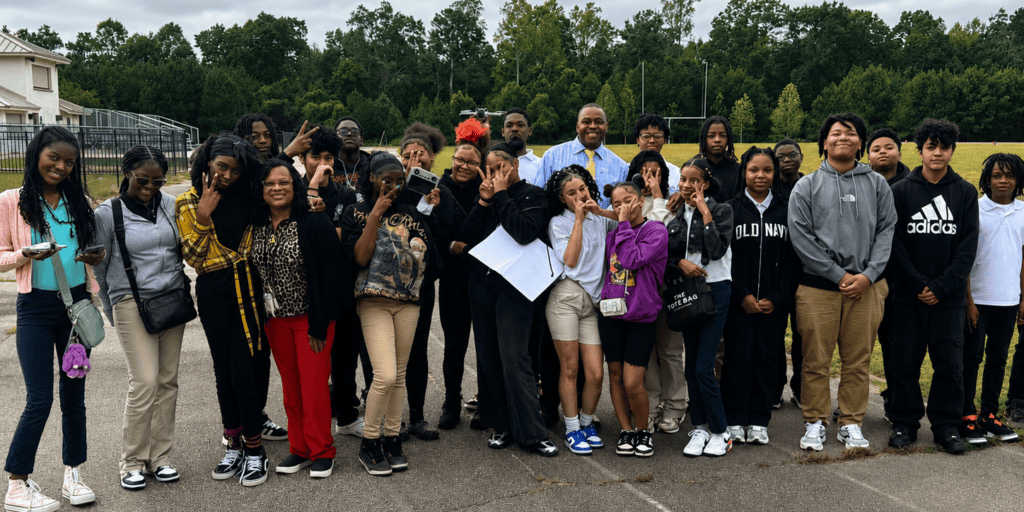
Every kid at Eddie White Middle Academy has seen many shots like that. But Dr. Micki Harris, principal of the school, says many of them ever wondered who took it.
“They never put two and two together as to how the shot was taken,” she said.
That gap is the whole reason the school’s drone program exists, the realization that somewhere in the middle of the flying, that the drone is a piece of professional equipment and that people get paid to operate it — and why not them?
Thanks to a grant from HireSmart Cares, the middle school now has a drone program that helps students learn about career possibilities: film, law enforcement, the military, or even Clayton County’s own district communications office, which uses drones for footage the students had probably already watched without thinking about it.
First Sergeant Francisco Ramey, who connects HireSmart Cares and school drone programs, went further into the law enforcement side with Eddie White Middle School students, talking about what it means to search from the air and locate someone, such as finding a missing child.
Harris said this made an impression.
“Many of them never tied it to professions,” she said. “And how far they can actually take them.”
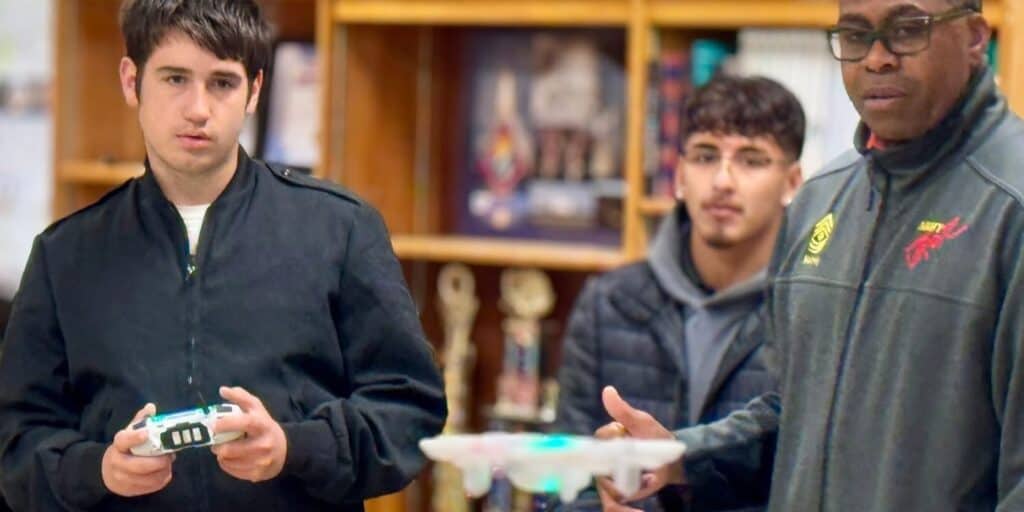
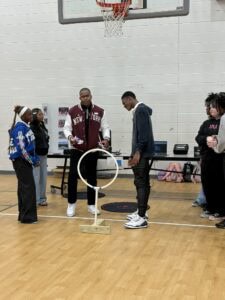
The Eddie White program runs out of the school’s small auxiliary gym twice a week after school, two hours at a stretch, sometimes with pizza. Sharanna Rushing, Eddie White’s STEM lead and computer engineering teacher, leads it. About 25 students came through the door in the fall. Seventeen or eighteen stayed with it. Four made a competition team, entered one event, and came home having learned a great deal about how far they still had to go.
From the first session, students were expected to name the equipment correctly and use the terms the way an operator would.
It sounds small, but it’s the difference between a kid with a toy and a kid with a tool.
“They’re beginning to speak the language consistently,” Harris said. “And that was a big deal to me.”
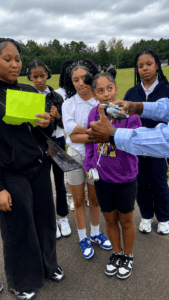 Harris spoke of one student enrolled in the school’s EBD unit, a special education placement tied to emotional and behavioral concerns, with three or four students in the room.
The student loves working with his hands. He built a radio, put an antenna on it, and got it working well enough that Harris could stand nearby and hear the static.
“Science makes him come alive,” she said. “There are no behavior issues. He’s very articulate. You put any form of technology in his hand, and he just goes above and beyond.”
He flew the drones. His grandmother teaches math at Eddie White, and she was in the room the day it happened.
“Her mouth was on the floor,” Harris said.
Of course, the career story doesn’t end at eighth grade.
Eddie White feeds into Lovejoy High School. Lovejoy’s principal, Dr. Kelvin Griffin, was Harris’s assistant principal before he took the job. Lovejoy has no drone program yet. It will, and this year’s outgoing Eddie White eighth graders will be its first class.
That was arranged on purpose. Harris and Griffin do their summer leadership retreats together and talk every day.
The endpoint is FAA Part 107, the certification a commercial drone pilot has to hold to fly for hire. A middle schooler cannot get one. A high school student can be pointed straight at it, and Harris plans to track how many of hers do. 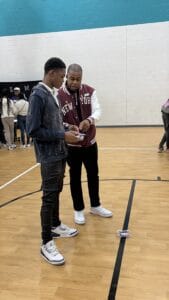
“That’s part of the promise that we made,” she said.
Ask about First Sergeant Ramey and Harris answers before the question is finished.
“He’s a ball of fire. The excitement that he brings when introducing it, if you had no desire, sometimes you develop one.”
Harris is convinced the students are ready for this and the adults around them are still catching up.
“The kids’ desire is there,” she said. “It’s the adults that are behind. They’re coming into this ready.”
Harris had one more assignment for them before August. Over the summer, the students would team up with the school’s podcast crew to produce a recruitment video for incoming sixth graders: sports, clubs, homecoming, and the administrators introducing themselves.
This would include an opening aerial shot of Eddie White Middle Academy, filmed by students who now know exactly who takes that shot and what it’s called and that somebody, somewhere, does it for a living — and why not them?