When the Lab Comes to Life: Empower Biotech Students Visit UGA
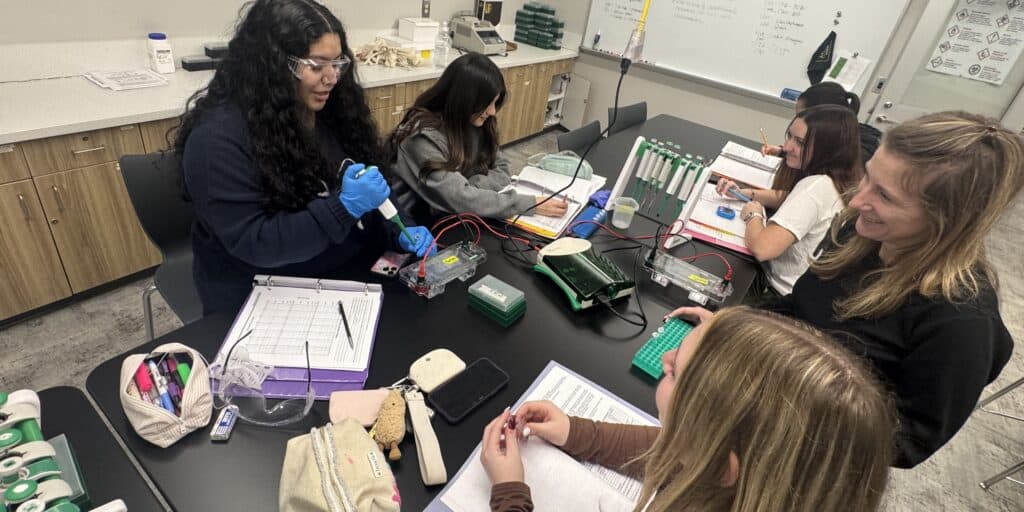
On a recent school day, Emily Gunderson’s biotechnology students at Empower College and Career Center in Jackson County were in the middle of something most high schoolers never touch. They had spent the previous day cutting DNA with restriction enzymes, and now they were running gel electrophoresis, sending electricity through a gel to separate DNA fragments by size. They would stain the gels and analyze the results the next day.
“It is a lot,” said Gunderson. “But this is an upper-level class.”
That’s something of an understatement. Gunderson’s program doesn’t just introduce students to biotechnology concepts. It puts them to work the way scientists do. The labs her students run, the techniques they practice, and the data they interpret mirror what happens in college labs and in industry. That’s by design.
Gunderson came to teaching from the lab herself. After earning a biology degree and working in industry, she transitioned to the classroom and eventually convinced her CTAE director to let her launch a dedicated biotechnology program. She started her first biotech class in 2015 at East Jackson High School. She has been teaching in Jackson County for 26 years, and her reach now extends well beyond her own classroom. She serves as a Bio-Rad Teacher Fellow, helping educators across the United States build biotechnology curriculum through webinars and professional development.
Her students learn more than lab technique. Career conversations are woven into the course from the start. Gunderson walks them through the broad landscape of biotechnology jobs, including quality assurance, bio manufacturing, and bioengineering, and talks honestly about what education each pathway requires.
“We look at the skills they’re using now and how those same skills apply in the workforce,” she said.
Some students leave her class headed straight into biotechnology careers. One former student recently earned her PhD in microbiology from the University of Florida and sent Gunderson a thank-you note saying that the skills she learned in the class sparked her interest in the field and that she still uses some of those foundational techniques in her doctoral research. Others go on to apply their skills in college research internships at UGA. Even students who don’t pursue biotechnology directly find that the lab experience gives them a leg up in their college science coursework.
“We have a lot of kids for whom this has opened up career options they didn’t even know existed,” said Gunderson.
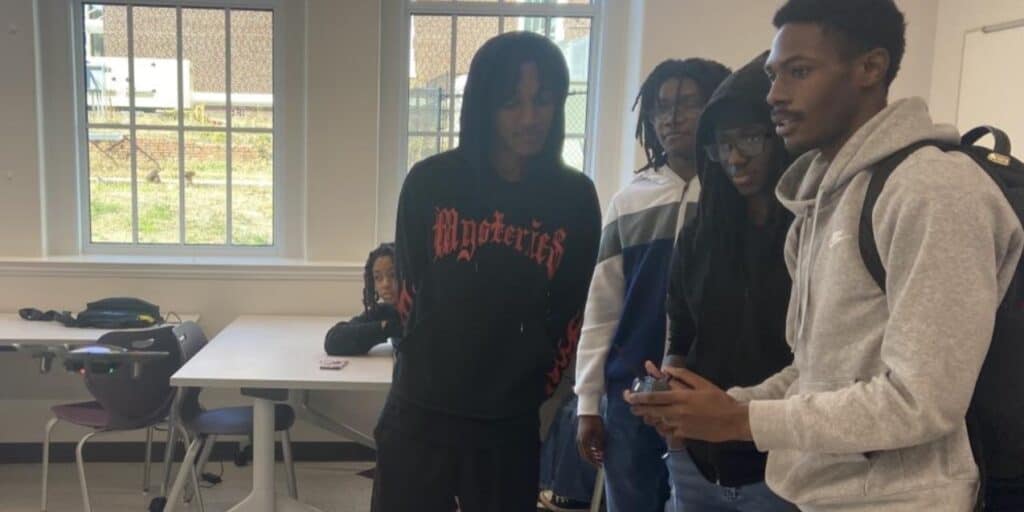
That idea is exactly what drove her to pursue a field trip to the University of Georgia on March 9th. She wanted her 13 students to see active research labs up close, to watch scientists at work, and to realize that the techniques they were practicing in Jefferson were the same ones being used just down the road in Athens. But field trips cost money, and the budget wasn’t there.
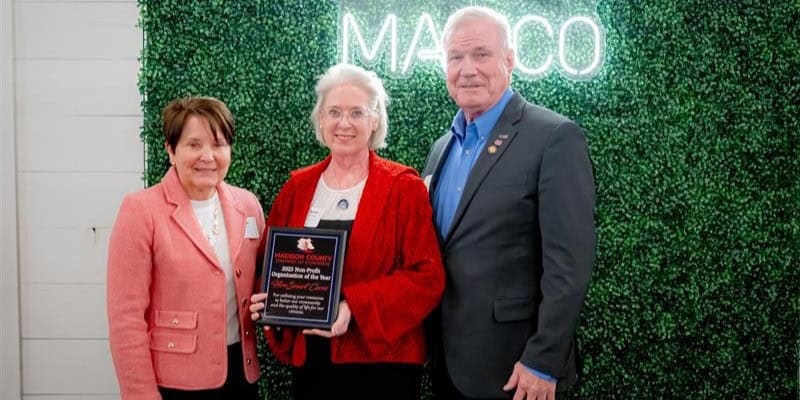
HireSmart Cares provided a grant of $698 to cover transportation, a substitute teacher, and lunch for the students. It was enough to make the trip happen.
What the students found at UGA left an impression. Gunderson’s class focuses on biotechnology broadly, with an emphasis on industrial bioscience but the trip exposed students to the deep connection between biotechnology and the poultry industry.
They toured labs where researchers were developing vaccines for poultry and livestock, studying infectious diseases, and working to improve egg production and animal feed through biotechnology. They learned that UGA is the first university in the country to offer an undergraduate surgical course as part of its avian biology major. They saw researchers working with bacterial specimens and learned how the university’s biotechnology program uses chickens as a primary subject of study.
“I learned that biotechnology could be applied anywhere,” one student wrote, “especially in places you wouldn’t expect, like the poultry science business.”
Another student described a shift in how they understood the field altogether.
“The field trip showed me how biotechnology affects the real world more than I previously thought,” the student wrote. “It is not just a field of diseases and genetics, but also a field of studying how food is produced and gets to the table.”
The conversations about GMOs left a particular impression on one student, who came away with a new perspective on how biotechnology is being used to address global problems. That student wrote about learning how golden rice, a genetically modified crop, was developed to combat vitamin A deficiency in the Philippines, where the deficiency had caused blindness in impoverished communities. The introduction of beta-carotene through that single agricultural innovation helped solve a public health crisis.
For many students, the trip also clarified their thinking about college and careers. They learned that a biotechnology major at UGA can lead to medical school, veterinary school, or law school, not just research careers. Some left with a specific school in mind. One student wrote that the trip made them consider pursuing a future at UGA’s College of Agriculture and Environmental Sciences. Another said simply: “I know where good programs for biotechnology could be located, and I know now whether I want to continue the biotechnology pathway.”
That kind of clarity is hard to manufacture in a classroom. It comes from seeing the real thing.
“I really wanted these kids to be exposed to that higher level, to see that next thing and realize they’re doing work similar to what’s being done at the university level,” said Gunderson. “I’m so grateful for the support from HireSmart Cares in making this happen.”