Learning Business by Building One at Commerce High
A T-shirt costs $3. Printing the design adds another 83 cents. If a student sells the finished shirt for $10, how much money did the business make?
Before anyone settles on an answer, Commerce High School marketing teacher Haley Greene has more questions. Who’s paying for replacement ink? What about the transfer paper? Have they accounted for the time spent making the shirt?
Those questions are part of the work underway in Greene’s new marketing program, where students are helping develop a school store while learning what it takes to run a business. They’re producing merchandise, preparing job applications, and helping decide how the operation should work.
“It’s almost like having your own business and building it from the ground up,” Greene said.
A grant from HireSmart Cares is helping students participate in that growing program through DECA, a student organization focused on business and marketing. Greene said the funding covered membership for 20 students, along with club T-shirts and supplies for a button fundraiser.
For students who might otherwise have been unable to join, that support opened an opportunity to get involved at the beginning.
 A Business Taking Shape
Greene taught fourth grade at Commerce Elementary School for three years before moving into the high school’s new marketing position this school year. Along with introducing the course, she’s reestablishing DECA, which hasn’t been active at the school in years.
She’s also helping turn a former video and audio room into a store. The target opening is August 2027, giving the class time to develop products, build inventory, and establish procedures.
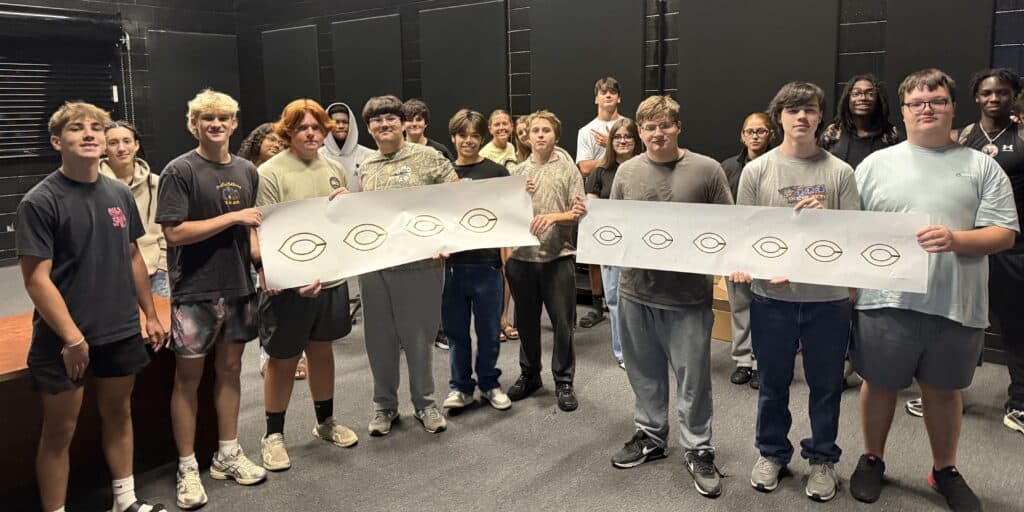
Students already have completed two apparel orders: 30 T-shirts for special needs students and 20 for FCCLA.
They’re learning to use an xTool apparel printer, two heat presses, a large-format Roland printer nicknamed “Roxanne,” and button press and laser equipment for engraving and personalizing products. They’re also working with Adobe software and Inkscape for graphic design. The equipment gives them opportunities to produce apparel, banners, window graphics, buttons, and other merchandise.
Making a product is only one part of the assignment. Students must consider what customers will buy and what price will cover the work and materials involved. They’re also helping develop interview questions and rules for the store.
“They’re helping me establish the rules for the school store because obviously it’s not here yet,” Greene said.
Students are preparing résumés and cover letters as part of the application process for store positions. Greene has identified about a dozen essential roles and is working out a rotation that will give students opportunities to participate while keeping up with their academic work.
She also wants them to learn enough about different jobs to fill in when someone is absent. One possibility is a practical assessment in which students demonstrate how to operate, clean, and safely shut down a piece of equipment.
Making Room for Students to Participate
As Greene develops the program, she’s mindful of students who want to get involved but face obstacles outside the classroom.
Some are shy and looking for a chance to put themselves out there. Others lack the financial resources or support at home to participate in a club. The HireSmart Cares grant helped her make DECA available to all 20 members.
“It was absolutely just a huge load of stress off my back,” Greene said. 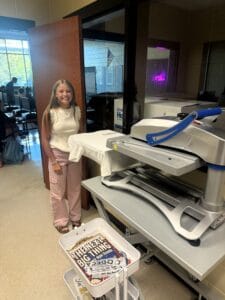
The funding also provided club shirts and button-making supplies, allowing students to begin fundraising. Students chose buttons as an initial product, giving them something relatively inexpensive and quick to produce.
Grant funds had also been allocated for a DECA fall rally at Six Flags, but the event was canceled. Greene is exploring another experience that could give students a similar opportunity to meet peers and participate in activities beyond their school.
She’s exchanging ideas with a partner program at North Hall and planning visits to see how other schools operate similar programs. Students also have opportunities ahead through DECA testing and competition.
For Greene, the early support has made starting a new program feel more manageable.
“It was a blessing to be able to have that opportunity,” she said.
Learning Alongside Her Students
The classroom lessons begin with workplace basics, including professional emails, interview skills, and how to present yourself to others. Students also study branding, advertising, and business planning.
In a recent food truck project, they worked with a hypothetical $100,000 budget. They had to research a truck rental, plan food expenses, develop a menu and logo, and account for routes, mileage, and fuel costs.
Some students already have ideas for businesses or side ventures. Greene wants to give them enough background to take an informed first step.
Over time, she hopes the store will serve the wider community, with online orders for merchandise, banners, and gifts. She also envisions advanced students working alongside school and district employees to explore possible careers.
For now, she’s encouraged by how readily students get involved. After learning a piece of equipment, they’re eager to bring in a classmate and show them how it works. That willingness to learn and share is helping the program take shape.
To learn more about HireSmart Cares, visit hiresmartcares.org.